
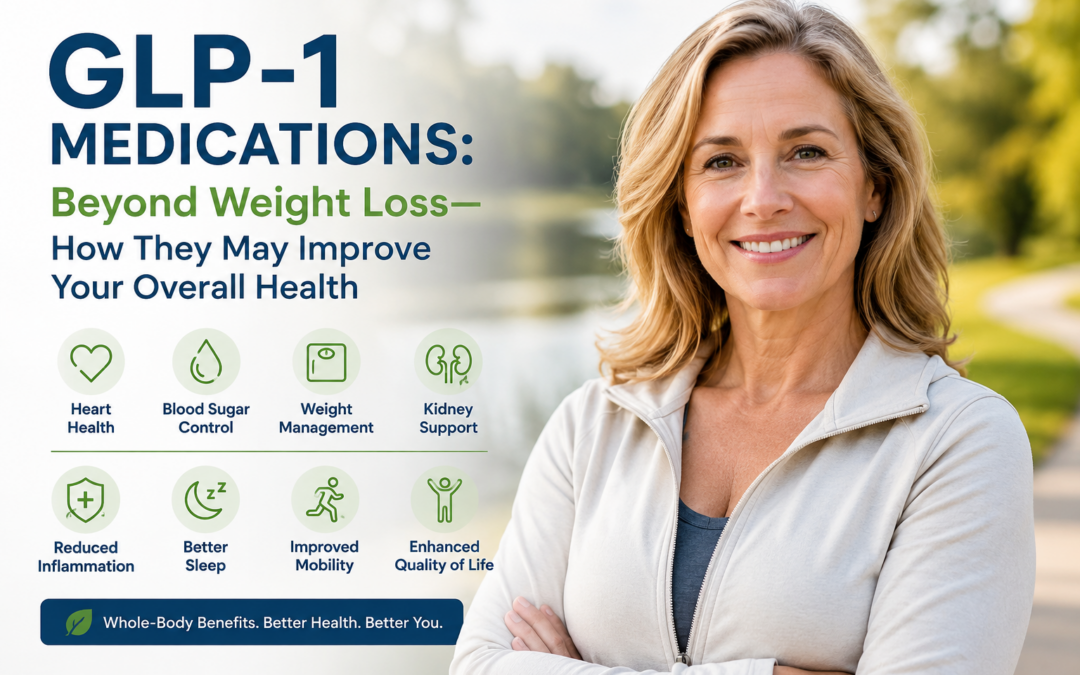
Over the past several years, GLP-1 medications have transformed the treatment of obesity and Type 2 diabetes. While many people recognize these medications for their ability to promote significant weight loss, researchers have discovered that their benefits extend far beyond the scale.
Today, GLP-1 receptor agonists are supported by a growing body of scientific evidence demonstrating improvements in cardiovascular health, blood sugar regulation, kidney function, inflammation, sleep, mobility, and overall quality of life. For appropriately selected patients, these medications represent a new approach to treating obesity as the chronic disease it is—not simply as a matter of willpower.
Understanding GLP-1 Medications
GLP-1 (glucagon-like peptide-1) is a naturally occurring hormone released by the intestines after eating. It plays an important role in regulating appetite, blood sugar, and digestion.
GLP-1 receptor agonist medications mimic this natural hormone by:
- Helping you feel full sooner and longer
- Reducing hunger and food cravings
- Slowing stomach emptying
- Improving insulin function
- Helping regulate blood sugar
- Supporting sustained weight loss when combined with lifestyle changes
These combined effects help many patients achieve meaningful improvements in their overall health.
Obesity Is More Than Excess Weight
Obesity is now recognized as a chronic medical disease that increases the risk of numerous serious health conditions, including:
- Heart disease
- Stroke
- Type 2 diabetes
- High blood pressure
- Obstructive sleep apnea
- Chronic kidney disease
- Fatty liver disease
- Osteoarthritis
- Certain cancers
Because obesity affects nearly every organ system, treating it may improve health throughout the body.
1. Supporting Heart Health
One of the most important discoveries involving GLP-1 medications is their potential to reduce cardiovascular risk.
Large clinical trials have demonstrated reductions in major adverse cardiovascular events—including heart attack, stroke, and cardiovascular death—in appropriately selected patients.
Researchers believe these benefits result from several factors working together:
- Weight reduction
- Lower blood pressure
- Reduced inflammation
- Improved blood vessel function
- Better blood sugar control
These findings have changed how many physicians view obesity treatment. Rather than focusing solely on weight loss, healthcare providers increasingly recognize that treating obesity may help reduce the risk of future cardiovascular disease.
2. Helping Prevent Type 2 Diabetes
Many adults with obesity have insulin resistance long before diabetes develops.
GLP-1 medications improve the body’s ability to regulate blood sugar by increasing insulin release when needed and decreasing excess glucose production by the liver.
For people with prediabetes, weight loss combined with improved glucose regulation may reduce the likelihood of progressing to Type 2 diabetes.
3. Lowering Blood Pressure
Excess weight places additional demands on the cardiovascular system.
Studies have shown that many patients taking GLP-1 medications experience modest but meaningful reductions in blood pressure.
Even small improvements in blood pressure can contribute to a lower long-term risk of cardiovascular complications.
4. Improving Cholesterol and Metabolic Health
GLP-1 therapy may also improve several metabolic risk factors associated with obesity.
Research has demonstrated improvements in:
- Triglyceride levels
- Certain cholesterol measurements
- Insulin sensitivity
- Overall metabolic health
These changes complement the benefits achieved through weight loss.
5. Reducing Chronic Inflammation
Obesity is associated with chronic, low-grade inflammation throughout the body.
Persistent inflammation contributes to cardiovascular disease and numerous chronic illnesses.
Several studies have shown reductions in inflammatory markers during GLP-1 treatment, suggesting another pathway through which these medications may improve long-term health.
6. Supporting Kidney Health
Emerging evidence suggests GLP-1 medications may help protect kidney function, particularly in patients with diabetes or elevated cardiovascular risk.
Although research continues, these findings offer another reason healthcare professionals are increasingly viewing GLP-1 therapy as more than simply a weight-loss medication.
7. Improving Sleep
Obesity is a major contributor to poor sleep quality and obstructive sleep apnea.
As patients lose weight, many experience:
- Improved sleep quality
- Reduced daytime fatigue
- Increased energy
- Better overall well-being
For individuals with obstructive sleep apnea, weight reduction may improve symptoms, although many patients still require evaluation and treatment by a sleep specialist.
8. Increasing Mobility
Every pound of body weight places additional stress on the joints.
As weight decreases, many patients report:
- Less knee pain
- Easier walking
- Improved balance
- Greater endurance
- Increased ability to exercise
Improved mobility often allows patients to become more physically active, further supporting long-term health.
9. Enhancing Quality of Life
Health improvements are not measured only by laboratory tests.
Patients frequently report improvements in daily living, including:
- Increased confidence
- Greater independence
- More energy
- Better participation in family activities
- Improved emotional well-being
While experiences vary, these functional improvements can be just as meaningful as changes in weight.
Medication Is Only One Part of the Solution
GLP-1 medications are most effective when combined with healthy lifestyle habits.
Successful long-term weight management includes:
- Balanced nutrition
- Regular physical activity
- Adequate sleep
- Stress management
- Routine medical follow-up
Medication should be viewed as one component of a comprehensive treatment plan rather than a standalone solution.
Are GLP-1 Medications Right for Everyone?
No.
Like all prescription medications, GLP-1 receptor agonists have potential side effects and are not appropriate for every patient. Your healthcare provider will evaluate your medical history, current medications, treatment goals, and potential risks before recommending therapy.
An individualized approach helps ensure that treatment is both safe and effective.
The Future of Obesity Treatment
The science surrounding GLP-1 medications continues to evolve rapidly.
Researchers are investigating additional benefits involving cardiovascular disease prevention, chronic kidney disease, fatty liver disease, neurodegenerative disorders, and other obesity-related conditions. As new evidence emerges, these medications may continue to reshape how healthcare professionals approach chronic disease prevention.
Learn More About the Medicare GLP-1 Bridge Program
Interested in learning how the Medicare GLP-1 Bridge Program works, who may qualify, and what benefits are available? Read our related article, “What Is the Evidence Supporting the Medicare GLP-1 Bridge Program for Obesity Prevention and Reduction of Future Cardiovascular Disease?” to explore the latest clinical evidence and Medicare coverage information.
Frequently Asked Questions
Are GLP-1 medications only for people with diabetes?
No. Several GLP-1 medications are FDA-approved for chronic weight management in adults who meet specific clinical criteria, regardless of whether they have diabetes.
Do GLP-1 medications improve overall health or only help with weight loss?
Research suggests their benefits extend beyond weight reduction. Studies have demonstrated improvements in cardiovascular health, blood sugar regulation, blood pressure, metabolic health, and other obesity-related conditions in appropriate patients.
How much weight can people lose?
Weight loss varies by medication, dosage, and individual factors. Clinical trials have shown average weight reductions exceeding 10% of body weight for some medications when combined with lifestyle changes.
Do I still need to eat healthy and exercise?
Yes. Healthy nutrition, regular physical activity, and ongoing medical care remain essential parts of successful long-term weight management.
Should I talk to my healthcare provider about GLP-1 therapy?
If you have obesity, overweight with weight-related medical conditions, or questions about medical weight management, discussing your options with a qualified healthcare provider is an appropriate first step.
Request More Information
If you would like to learn more about GLP-1 medications, medical weight management, or whether you may be a candidate for treatment, we invite you to complete our secure inquiry form. A member of the DPC Medical–Dodson Pain Consultants team will review your request and contact you to answer your questions and discuss your personalized treatment options.