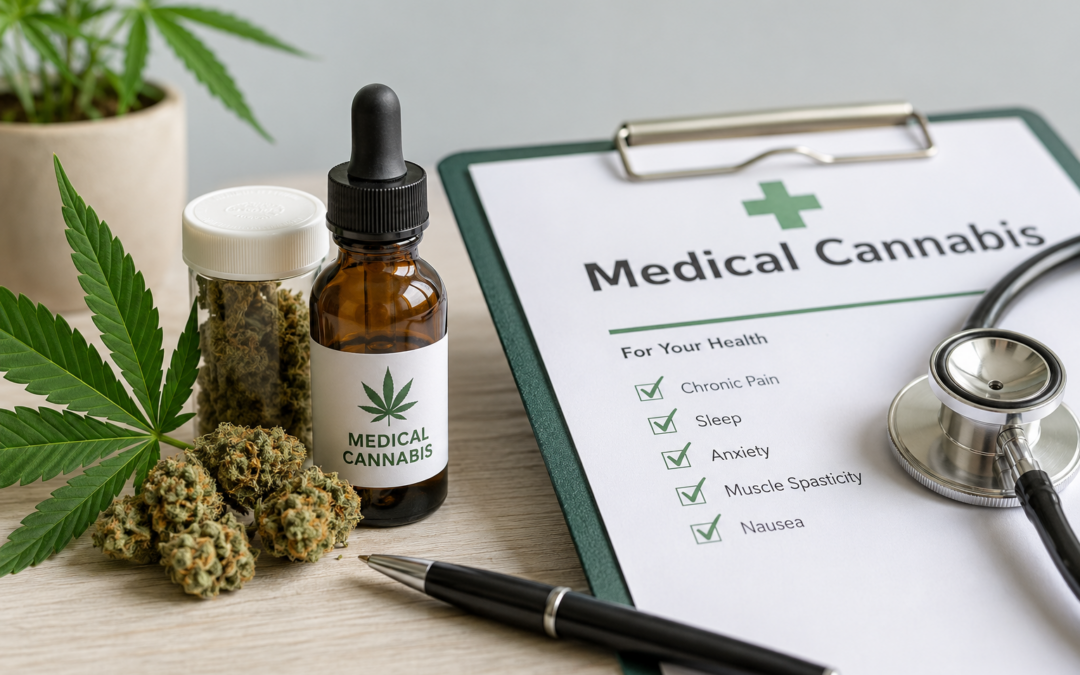
Medical cannabis may offer modest, short-term pain relief for some people, especially those with nerve-related pain. It can also cause dizziness, sleepiness, and other side effects. Whether it is worth trying depends on your symptoms, medical history, and treatment...
Medical cannabis is often discussed as though it provides only one benefit: pain relief. In reality, cannabinoids interact with systems involved in pain perception, nausea, appetite, muscle movement, sleep, mood, and neurological signaling. That does not mean medical...
Medical cannabis has moved from the margins of medicine into a serious conversation between patients and healthcare providers. People living with chronic pain, muscle spasms, cancer-related symptoms, post-traumatic stress disorder (PTSD), and other persistent medical...
Many patients diagnosed with Obstructive Sleep Apnea (OSA) are prescribed CPAP therapy to help improve breathing during sleep. While CPAP treatment helps many individuals, some patients struggle to tolerate the machine consistently. Patients may report discomfort,...
Many patients are surprised to learn that Obstructive Sleep Apnea (OSA) is one of the qualifying medical conditions recognized in Minnesota’s medical cannabis program. Patients experiencing chronic fatigue, loud snoring, interrupted sleep, daytime sleepiness, or...
Minnesota has one of the more structured medical cannabis programs in the Midwest. Patients who qualify can receive a 3-year medical cannabis card in Minnesota, allowing long-term access to cannabis treatment with fewer renewal requirements. Understanding how...