
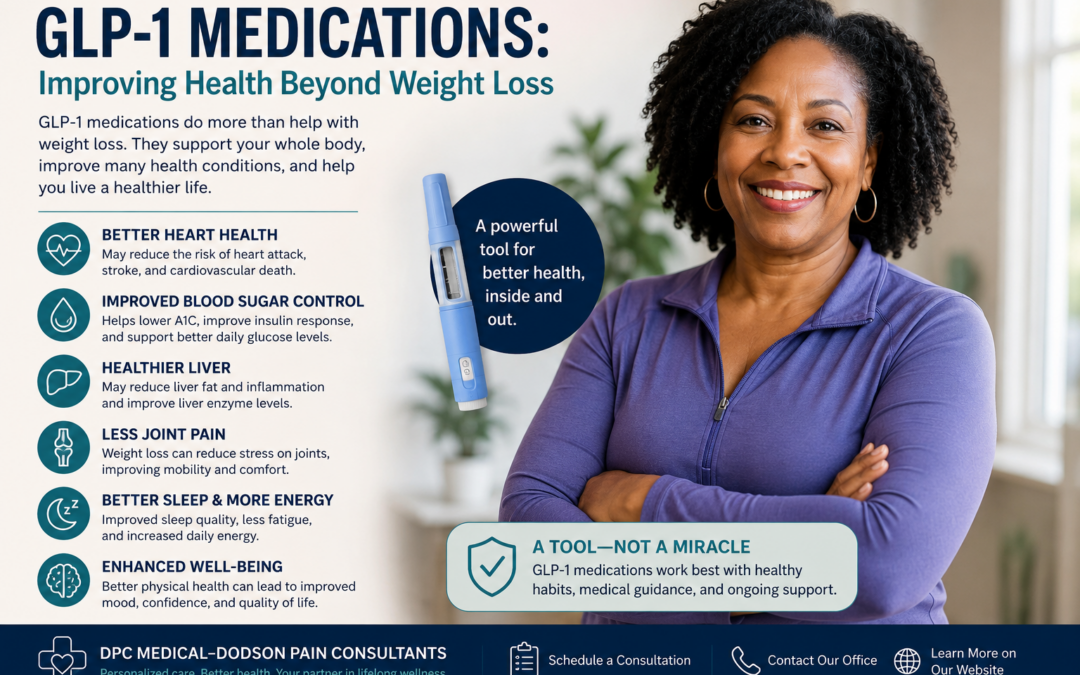
For many years, obesity was viewed simply as a matter of willpower. Today, medical research tells a different story. Obesity is now recognized as a complex, chronic disease influenced by genetics, hormones, metabolism, and environmental factors. One of the most important breakthroughs in treating obesity has been the development of GLP-1 receptor agonist medications.
Although these medications are widely known for helping patients lose weight, the scientific evidence continues to show that their benefits extend far beyond the number on the scale. GLP-1 medications are improving cardiovascular health, reducing the risk of chronic disease, decreasing inflammation, improving quality of life, and helping many people live healthier, longer lives.
What Are GLP-1 Medications?
GLP-1 stands for glucagon-like peptide-1, a hormone naturally produced in the intestine after eating. This hormone helps regulate several important body functions, including:
- Appetite and hunger
- Blood sugar control
- Insulin release
- Stomach emptying
- Brain signals that promote fullness
GLP-1 medications are designed to mimic this natural hormone, helping patients eat less while improving metabolic health.
Examples include:
- Wegovy® (semaglutide)
- Ozempic® (semaglutide)
- Zepbound® (tirzepatide)
- Mounjaro® (tirzepatide)
- Saxenda® (liraglutide)
These medications are prescribed based on individual medical conditions and FDA-approved indications.
Weight Loss Is Only the Beginning
While meaningful weight loss is one of the most visible benefits, researchers have discovered that reducing excess body fat often leads to improvements throughout the body.
Patients frequently experience improvements in:
- Blood pressure
- Cholesterol levels
- Blood sugar regulation
- Mobility
- Energy levels
- Joint pain
- Sleep quality
- Physical endurance
Even a modest reduction in body weight can significantly decrease the risk of future medical complications.
Better Heart Health
Heart disease remains the leading cause of death in the United States.
Several large clinical trials have demonstrated that certain GLP-1 medications reduce the risk of major cardiovascular events in appropriate patients, including:
- Heart attack
- Stroke
- Cardiovascular death
These benefits appear to result from several mechanisms:
- Reduced body weight
- Lower blood pressure
- Improved cholesterol profiles
- Better blood sugar control
- Reduced inflammation
- Improved blood vessel function
This is why GLP-1 medications have become an important part of cardiovascular risk reduction for many eligible patients.
Improved Blood Sugar Control
GLP-1 medications help the pancreas release insulin only when blood sugar levels rise. This reduces the risk of excessively low blood sugar while improving glucose control.
For patients with Type 2 diabetes, this often leads to:
- Lower A1C levels
- Better daily glucose control
- Reduced insulin requirements in some individuals
- Lower risk of diabetes-related complications
Some patients without diabetes may also experience improved insulin sensitivity as excess weight decreases.
Reduced Chronic Inflammation
Obesity is associated with chronic low-grade inflammation throughout the body.
Scientists now believe this inflammation contributes to numerous diseases, including:
- Heart disease
- Arthritis
- Fatty liver disease
- Kidney disease
- Sleep apnea
- Certain cancers
As patients lose excess fat and improve metabolic health, inflammatory markers often decrease, contributing to better overall health.
Healthier Liver Function
Metabolic dysfunction-associated steatotic liver disease (MASLD), formerly known as nonalcoholic fatty liver disease (NAFLD), affects millions of Americans.
Excess fat accumulation in the liver can eventually lead to:
- Liver inflammation
- Scarring (fibrosis)
- Cirrhosis
- Liver failure
Research suggests GLP-1 medications may reduce liver fat while improving liver enzyme levels in many patients.
Better Sleep
Excess weight contributes to poor sleep quality.
Many patients report improvements in:
- Snoring
- Daytime fatigue
- Sleep quality
- Energy levels
Weight reduction may also improve symptoms of obstructive sleep apnea in appropriate patients, particularly when combined with comprehensive medical care.
Less Joint Pain
Every extra pound of body weight places additional stress on the knees, hips, ankles, and lower back.
As weight decreases, many patients notice:
- Less knee pain
- Easier walking
- Improved mobility
- Increased physical activity
- Better quality of life
Improved mobility often creates a positive cycle where patients become more active, further supporting their long-term health.
Enhanced Mental Well-Being
Living with obesity can affect emotional health as well as physical health.
As overall health improves, many patients report:
- Greater self-confidence
- Improved mood
- Increased physical activity
- Better participation in family activities
- Improved overall quality of life
While GLP-1 medications are not treatments for depression or anxiety, improvements in physical health often contribute to greater emotional well-being.
A Tool—Not a Miracle
GLP-1 medications work best when combined with healthy lifestyle changes.
Successful long-term treatment typically includes:
- Balanced nutrition
- Regular physical activity
- Adequate sleep
- Stress management
- Ongoing medical supervision
These medications should always be used under the guidance of a qualified healthcare professional who can monitor progress and adjust treatment as needed.
Could GLP-1 Therapy Be Right for You?
Every patient is different. Age, medical history, current medications, body mass index (BMI), and existing health conditions all influence whether GLP-1 therapy is appropriate.
A comprehensive medical evaluation can help determine whether these medications fit into your personalized treatment plan.
If you are struggling with excess weight or obesity-related health conditions, speaking with an experienced healthcare provider may be the first step toward improving your long-term health.
Take the First Step Toward Better Health
At DPC Medical–Dodson Pain Consultants, we believe weight management is about much more than losing pounds—it is about reducing disease risk, improving quality of life, and helping patients achieve better overall health.
If you would like to learn whether GLP-1 therapy may be appropriate for you, we invite you to:
- Complete our Inquiry Form
- Contact our office to schedule a consultation
- Read our previous article about the Medicare GLP-1 Bridge Program to learn about additional treatment opportunities for eligible Medicare beneficiaries
Together, we can develop a personalized plan focused on lasting health—not simply weight loss.