
Beyond Weight Loss: 7 Health Benefits of Tirzepatide You Should Know About
Most people have heard about Tirzepatide because of its impressive weight-loss results. However, recent research suggests that Tirzepatide may provide benefits far beyond the number on the scale.
Tirzepatide is the active ingredient in Zepbound® and Mounjaro®. It works by activating two hormone pathways known as GIP and GLP-1 receptors, helping regulate appetite, blood sugar, and metabolism.
Here are seven evidence-based benefits that researchers have observed in clinical trials.
DPC Medical-Dodson Pain Consultants help patients in Plymouth, Minneapolis, Maple Grove, Minnetonka, and the Twin Cities
1. Significant Weight Loss
Tirzepatide has produced some of the greatest weight-loss results ever seen with a medication.
In the SURMOUNT-1 clinical trial, participants receiving the highest dose experienced an average weight reduction of approximately 22.5% of their body weight after 72 weeks. Nearly 40% of participants lost at least 25% of their starting weight.
For many individuals struggling with obesity, these results approach the amount of weight loss previously seen only with bariatric surgery.
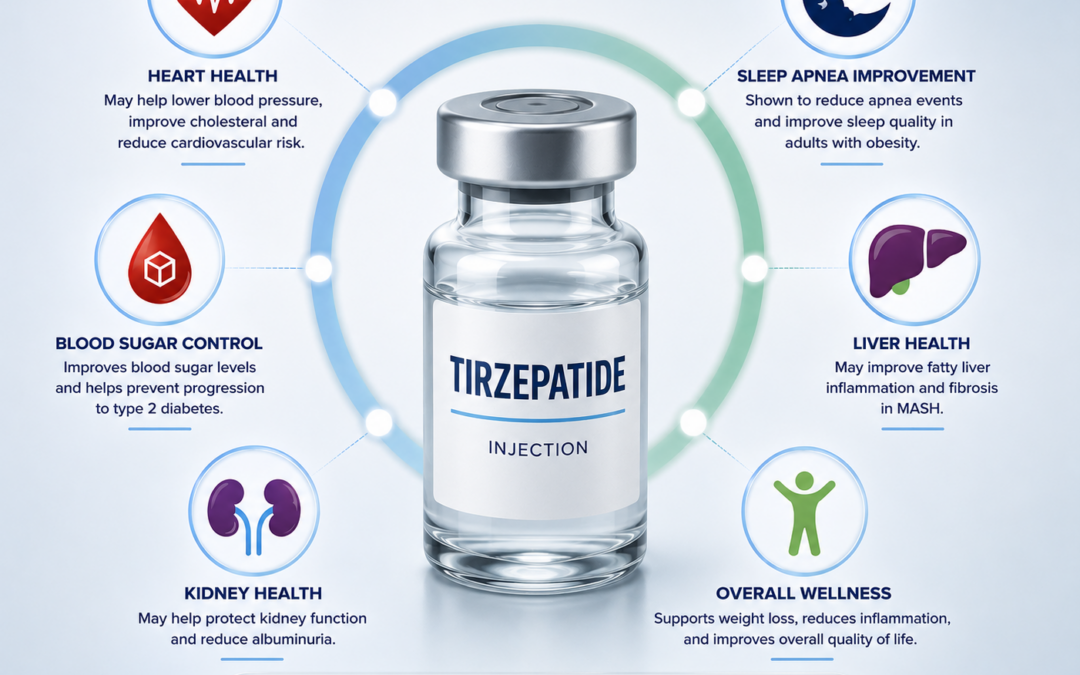
2. Improved Blood Sugar Control
Tirzepatide was initially developed to help manage type 2 diabetes.
Clinical studies have demonstrated significant reductions in hemoglobin A1c levels, with many patients achieving normal or near-normal blood sugar levels.
Improved blood sugar control may help reduce the risk of diabetes-related complications affecting the eyes, kidneys, nerves, and cardiovascular system.
3. Reduced Risk of Progression to Type 2 Diabetes
Many individuals with obesity also have prediabetes.
Research suggests that Tirzepatide may help prevent or delay progression from prediabetes to type 2 diabetes by improving insulin sensitivity, reducing body weight, and lowering blood sugar levels.
This may be especially important for patients with a family history of diabetes or metabolic syndrome.
4. Better Heart and Cardiometabolic Health
Excess weight is associated with high blood pressure, abnormal cholesterol levels, inflammation, and cardiovascular disease.
Studies have shown that Tirzepatide can:
• Lower systolic and diastolic blood pressure
• Reduce triglycerides and LDL cholesterol
• Increase HDL cholesterol
• Lower markers of inflammation
Researchers have estimated that these improvements may significantly reduce long-term cardiovascular risk.
5. Improvement in Obstructive Sleep Apnea
One of the most exciting recent developments is Tirzepatide’s approval for adults with obesity and moderate-to-severe obstructive sleep apnea.
In the SURMOUNT-OSA trials, Tirzepatide reduced the apnea-hypopnea index (AHI) by nearly 60% from baseline.
Many participants experienced such significant improvement that PAP therapy may no longer have been recommended based on follow-up sleep study findings.
Because sleep apnea is associated with cardiovascular disease, fatigue, impaired concentration, and reduced quality of life, this represents an important advancement in treatment.
Because tirzepatide is now FDA-approved for certain adults with obesity and obstructive sleep apnea, improving sleep-disordered breathing may be another important benefit beyond weight loss. To learn more, read our article: “Can Untreated Sleep Apnea Damage Your Heart?”
6. Potential Benefits for Fatty Liver Disease
Metabolic Dysfunction-Associated Steatohepatitis (MASH), previously called NASH, is an increasingly common form of fatty liver disease.
In clinical trials, Tirzepatide demonstrated significant improvements in liver inflammation and liver fibrosis.
Researchers continue to study whether Tirzepatide may become an important treatment option for patients with obesity-related liver disease.
7. Emerging Kidney Benefits
Early research suggests Tirzepatide may help protect kidney function.
Studies have demonstrated reductions in albuminuria and favorable kidney-related outcomes compared with some other therapies.
Although additional research is ongoing, these findings are encouraging for patients with diabetes and obesity who are at increased risk for chronic kidney disease.
Common Side Effects
The most common side effects include:
• Nausea
• Constipation
• Diarrhea
• Vomiting
• Decreased appetite
These side effects are generally mild to moderate and often improve as the body adjusts to treatment.
The Bottom Line
Tirzepatide is more than a weight-loss medication. Research suggests it may improve blood sugar control, reduce cardiometabolic risk factors, improve obstructive sleep apnea, support liver health, and potentially benefit kidney function.
As with any medication, treatment decisions should be individualized based on a patient’s medical history, goals, and risk factors.
If you are interested in learning whether Tirzepatide may be appropriate for your weight-loss goals, schedule a consultation with DPC Medical.
Call 763-588-7099
Frequently Asked Questions About Tirzepatide
What is Tirzepatide?
Tirzepatide is a prescription medication that activates both GIP and GLP-1 receptors. It is used to help with weight management and blood sugar control and has also been approved for certain adults with obesity and obstructive sleep apnea.
How much weight can people lose with Tirzepatide?
Clinical studies have shown that some individuals lost more than 20% of their body weight when combined with healthy lifestyle changes. Individual results vary.
Does Tirzepatide only help with weight loss?
No. Research has shown benefits beyond weight loss, including improvements in blood sugar levels, blood pressure, cholesterol, obstructive sleep apnea, and other cardiometabolic risk factors.
Can Tirzepatide improve sleep apnea?
In clinical trials involving adults with obesity and obstructive sleep apnea, tirzepatide significantly reduced the severity of sleep apnea and improved sleep-related outcomes.
What are the most common side effects?
The most common side effects include nausea, diarrhea, constipation, vomiting, and decreased appetite. These side effects are often mild to moderate and may improve over time.
Is Tirzepatide the same as semaglutide?
No. While both medications belong to the GLP-1 class, tirzepatide works on two hormone pathways (GIP and GLP-1), whereas semaglutide primarily works on the GLP-1 pathway.
Who may be a candidate for Tirzepatide?
Adults with obesity, overweight individuals with certain weight-related health conditions, and some patients with type 2 diabetes may be candidates. A medical evaluation is necessary to determine whether tirzepatide is appropriate.
How do I learn whether Tirzepatide is right for me?
Schedule a consultation with DPC Medical to discuss your health goals, medical history, and available treatment options.
Interested in learning whether tirzepatide may be right for you?
References
- Jastreboff AM, et al. Tirzepatide Once Weekly for the Treatment of Obesity. The New England Journal of Medicine
- Garvey WT, et al. Tirzepatide Once Weekly for the Treatment of Obesity in People With Type 2 Diabetes (SURMOUNT-2). The Lancet
- Malhotra A, et al. Tirzepatide for the Treatment of Obstructive Sleep Apnea and Obesity. The New England Journal of Medicine
- Loomba R, et al. Tirzepatide for Metabolic Dysfunction–Associated Steatohepatitis with Liver Fibrosis. The New England Journal of Medicine
- Packer M, et al. Tirzepatide for Heart Failure with Preserved Ejection Fraction and Obesity. The New England Journal of Medicine