
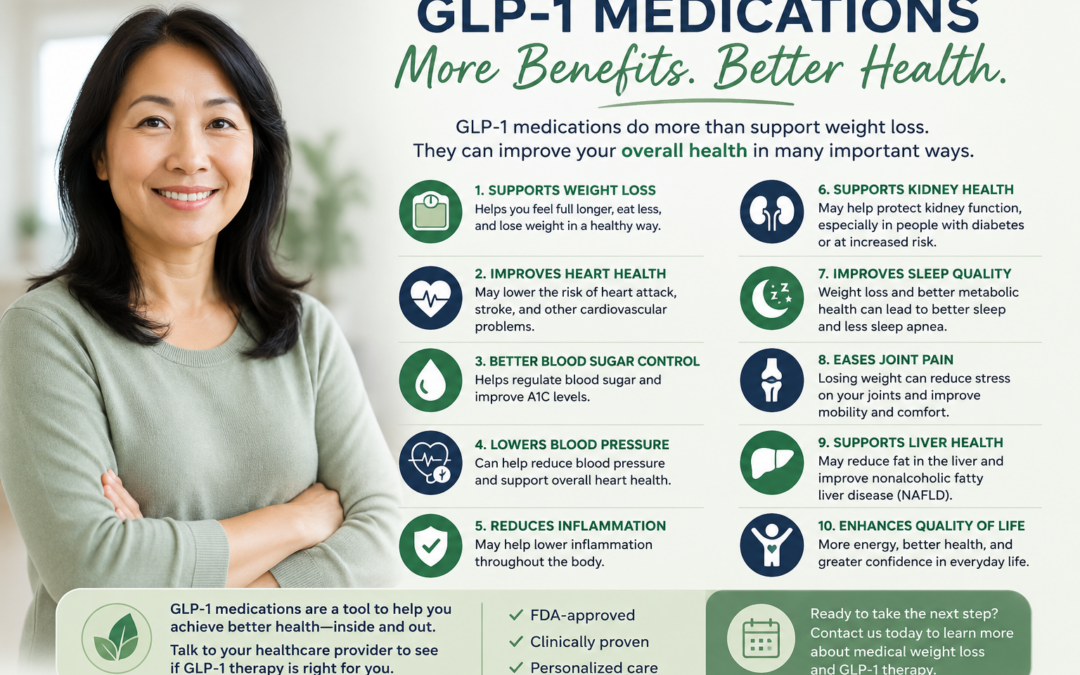
The Health Benefits of GLP-1 Medications: More Than Weight Loss
GLP-1 medications have transformed the treatment of obesity and Type 2 diabetes. While many people first hear about these medications because of their impressive weight-loss results, research has shown that their potential benefits extend well beyond the number on the scale.
Today, GLP-1 receptor agonists are being used to improve metabolic health, reduce cardiovascular risk, and help manage obesity as the chronic disease it is. For many patients, these medications represent a comprehensive approach to improving overall health rather than simply losing weight.
What Are GLP-1 Medications?
GLP-1 stands for glucagon-like peptide-1, a naturally occurring hormone that helps regulate appetite, blood sugar, and digestion.
GLP-1 receptor agonists work by:
- Reducing hunger and food cravings
- Helping you feel full longer
- Slowing stomach emptying
- Improving blood sugar regulation
- Supporting sustained weight loss when combined with healthy lifestyle changes
These effects can improve many obesity-related health conditions.
Obesity Is a Chronic Disease
Obesity is associated with numerous medical conditions, including:
- Heart disease
- Stroke
- High blood pressure
- Type 2 diabetes
- Obstructive sleep apnea
- Chronic kidney disease
- Fatty liver disease
- Osteoarthritis
- Certain obesity-related cancers
Treating obesity may help reduce the risk of developing or worsening many of these conditions.
1. Meaningful Weight Loss
One of the most recognized benefits of GLP-1 medications is significant weight loss.
Clinical studies have shown that many patients lose more than 10% of their body weight when GLP-1 therapy is combined with healthy eating, regular physical activity, and ongoing medical supervision.
Even modest weight loss can improve blood pressure, mobility, and overall health.
2. Improved Heart Health
Large clinical trials have demonstrated that certain GLP-1 medications reduce the risk of major cardiovascular events in appropriately selected patients.
Potential cardiovascular benefits include:
- Reduced risk of heart attack
- Reduced risk of stroke
- Lower risk of cardiovascular death
- Lower blood pressure
- Improved blood vessel function
These findings have changed the way healthcare professionals view obesity treatment.
3. Better Blood Sugar Control
GLP-1 medications improve how the body regulates blood sugar by increasing insulin release when needed while reducing excess glucose production.
For individuals with Type 2 diabetes or prediabetes, improved glucose control may reduce the risk of long-term complications.
4. Lower Blood Pressure
Weight loss combined with the direct effects of GLP-1 therapy often leads to modest reductions in blood pressure.
Lower blood pressure contributes to improved cardiovascular health and may reduce the risk of future complications.
5. Improved Metabolic Health
Research has shown improvements in several metabolic markers, including:
- Triglycerides
- Cholesterol profiles
- Insulin sensitivity
- Overall metabolic function
These improvements work together to support long-term health.
6. Reduced Chronic Inflammation
Obesity is associated with chronic, low-grade inflammation throughout the body.
Emerging evidence suggests GLP-1 medications may reduce inflammatory activity, which could contribute to improvements in cardiovascular and metabolic health.
7. Kidney Health
Recent studies suggest that GLP-1 medications may help protect kidney function in some patients, particularly those with diabetes or increased cardiovascular risk.
Researchers continue to investigate the full extent of these potential benefits.
8. Better Sleep
Weight loss achieved through GLP-1 therapy may improve sleep quality for many patients.
For individuals with obesity-related obstructive sleep apnea, weight reduction may lessen symptoms, although additional treatment may still be needed.
9. Improved Mobility and Joint Function
Excess body weight places considerable stress on the knees, hips, ankles, and lower back.
As weight decreases, many patients experience:
- Easier walking
- Increased physical activity
- Reduced joint discomfort
- Improved endurance
Improved mobility often encourages even healthier lifestyle habits.
10. Enhanced Quality of Life
Many patients report improvements that go beyond laboratory values, including:
- Increased energy
- Better physical function
- Greater confidence
- Improved participation in work and family activities
- Enhanced overall well-being
While every patient’s experience is unique, these quality-of-life improvements are often among the most meaningful outcomes.
Healthy Habits Still Matter
GLP-1 medications work best when combined with healthy lifestyle choices.
Patients should continue to focus on:
- Nutritious eating
- Regular physical activity
- Adequate sleep
- Stress management
- Routine medical follow-up
Medication should be viewed as one part of a comprehensive treatment plan.
Are GLP-1 Medications Right for Everyone?
No.
Like all prescription medications, GLP-1 therapies have potential side effects and are not appropriate for every individual. A healthcare provider can determine whether treatment is appropriate after reviewing your medical history, current medications, treatment goals, and potential risks.
Frequently Asked Questions
Do GLP-1 medications only help with weight loss?
No. Research suggests GLP-1 medications may also improve heart health, blood sugar control, blood pressure, metabolic health, and several obesity-related medical conditions.
Can GLP-1 medications help prevent Type 2 diabetes?
For many people with obesity or prediabetes, weight loss and improved glucose regulation may reduce the risk of progressing to Type 2 diabetes.
Will I still need to eat healthy and exercise?
Yes. Healthy nutrition, physical activity, and ongoing medical care remain essential components of successful long-term weight management.
How long do I need to take GLP-1 medication?
Treatment varies from person to person. Your healthcare provider will develop an individualized plan based on your health goals, treatment response, and any side effects.
Where can I learn more?
To learn more about GLP-1 therapy and related topics, explore these resources:
- GLP-1/GIP Weight Loss Therapy: Is It Right for You?
- GLP-1 Medications and Chronic Inflammation: Could Reducing Inflammation Be the Key to Better Health?
- Beyond Weight Loss: 7 Health Benefits of Tirzepatide You Should Know About
If you have questions about GLP-1 medications or medical weight management, we invite you to complete our Medical Weight Loss Inquiry Form or visit our Contact Us page. Our team is happy to answer your questions and discuss whether you may be a candidate for treatment.
- Gonzalez-Rellan MJ, et al. The Expanding Benefits of GLP-1 Medicines. 2025.
Summarizes evidence for GLP-1 medications in obesity, cardiovascular disease, chronic kidney disease, and metabolic disorders. - Badve SV, et al. Effects of GLP-1 Receptor Agonists on Kidney and Cardiovascular Outcomes: A Systematic Review and Meta-analysis. The Lancet Diabetes & Endocrinology. 2025.
Demonstrates significant reductions in clinically important kidney events, kidney failure, and cardiovascular events with GLP-1 receptor agonists. - Chen TH, et al. GLP-1 Receptor Agonists and Cardiovascular and Kidney Outcomes by Body Mass Index. JAMA Network Open. 2025.
Shows cardiovascular benefits across BMI groups and consistent kidney benefits among patients with type 2 diabetes. - Moiz A, et al. The Expanding Role of GLP-1 Receptor Agonists. 2025.
Reviews the growing role of GLP-1 receptor agonists beyond diabetes, including obesity management and cardiovascular protection. - Moiz A, et al. Balancing the Benefits and Risks of GLP-1 Receptor Agonists: A Clinical Guide for Shared Decision-Making. eClinicalMedicine. 2026.
Provides practical guidance on balancing the expanding benefits of GLP-1 therapy with individualized safety considerations. - Gilbert O, Gulati M, Gluckman TJ, et al. 2025 ACC Expert Consensus Statement on Medical Weight Management for Optimization of Cardiovascular Health. Journal of the American College of Cardiology. 2025.
Current expert guidance on obesity treatment and the role of GLP-1 medications in reducing cardiovascular risk.